







Last Updated On 15.09.2026
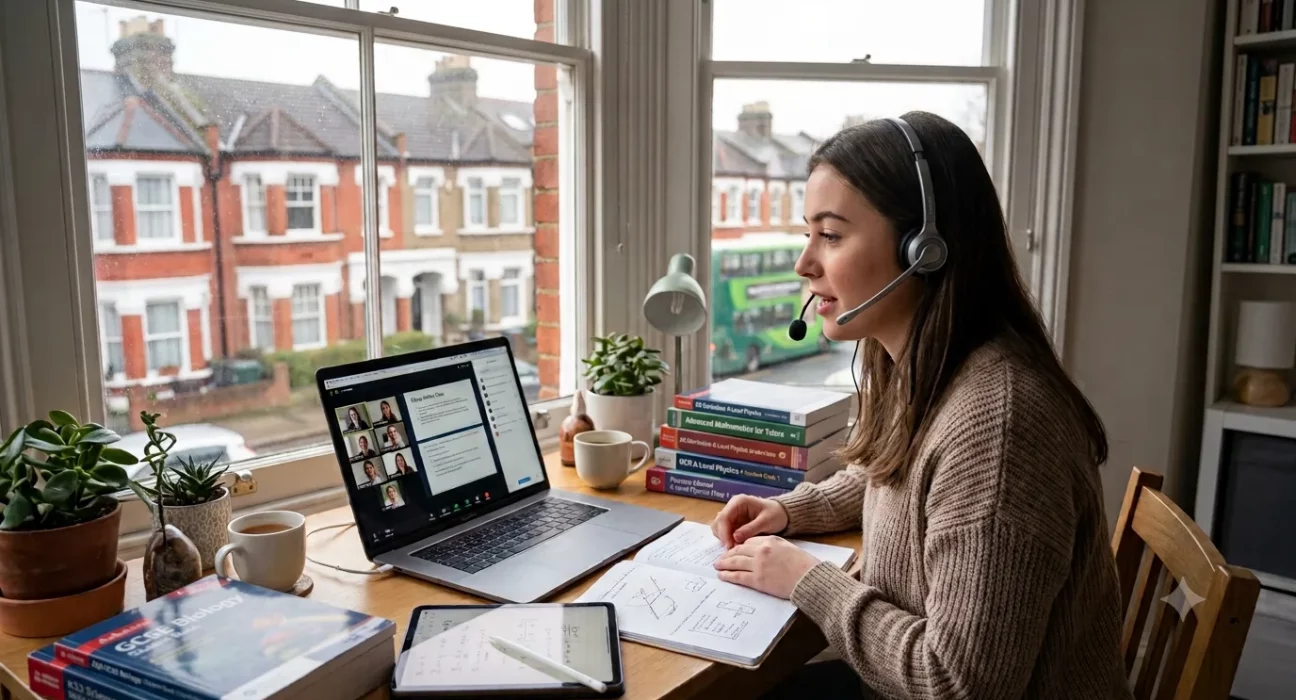
Online tutoring jobs in UK offer flexible opportunities for teachers, university students, graduates and professionals who want to earn remotely while helping learners improve their skills.
Unlike traditional classroom teaching, becoming a private online tutor does not automatically require Qualified Teacher Status or a teaching degree. Requirements depend on the subject, student age, platform and type of tutoring work.
Some platforms accept university students and subject specialists, while others prefer experienced teachers.
Rates also vary considerably. The National Careers Service says online tutoring can pay around £15 to £40 per hour, while specialist tutors and some platform tutors may earn considerably more depending on their expertise and demand.
Do You Need Qualifications To Become An Online Tutor?
There is no universal rule requiring every private tutor to hold Qualified Teacher Status. Local authority guidance confirms that private tutors are not legally required to be qualified teachers and do not have to belong to an official registration body.
That is different from teaching in a maintained school in England, where QTS is generally required.
Tutoring companies can still impose their own entry standards. Depending on the role, they may ask for a degree, university enrolment, strong GCSE or A-Level results, previous tutoring experience or evidence of specialist knowledge.
Do Online Tutors Need A DBS Check?
A DBS certificate is an important consideration when tutoring children, but the rules need to be explained carefully.
Independent private tutors are not automatically legally required to have a DBS certificate simply because they provide tutoring. However, tutoring companies, schools, agencies and parents may require one as part of their safeguarding arrangements.
A major change took effect on 21 January 2026. Eligible self-employed workers, including private tutors, can now apply for Enhanced or Enhanced with Barred List DBS checks through an approved umbrella body rather than needing an employer to make the application.
Tutors can learn more about the different types of checks and safeguarding considerations through information on the Disclosure and Barring Service.
Different systems apply in Scotland and Northern Ireland, so tutors should check the rules applying where they work.
How To Become An Online Tutor Step By Step?
The process does not need to be complicated.
Start by choosing the subject and level you can teach confidently. Decide whether you want to work with primary pupils, GCSE students, A-Level learners, university students or adults.
Next, prepare a reliable laptop or desktop computer, webcam, microphone, stable broadband connection and quiet teaching environment. A digital writing tablet can also be useful for maths and science.
Check whether your chosen role makes you eligible for an appropriate background check and prepare evidence of academic or professional qualifications.
You can then decide between applying to tutoring platforms and finding students independently.
Finally, set a realistic starting rate, build a detailed tutor profile and collect legitimate reviews as your experience grows.
Top 10 Online Tutoring Jobs in UK
1. Online Maths Tutor

Maths remains one of the strongest subjects for online tutoring because students frequently seek additional help with Key Stage 2, Key Stage 3, GCSE and A-Level material.
Tutors need strong subject knowledge and the ability to explain calculations clearly using digital whiteboards or screen sharing.
You do not automatically need a mathematics degree to work as a private maths tutor. Platform requirements differ. MyTutor, for example, recruits eligible university students and recent graduates and sets its own academic criteria.
Experienced GCSE and A-Level maths tutors can often command higher rates than tutors covering younger age groups.
2. Online English Tutor

Online English tutoring covers areas including reading, writing, spelling, grammar, GCSE English Language, English Literature and essay preparation.
Tutors may work with school pupils, international learners or adults improving their written and spoken English.
Strong communication skills are essential because successful tutoring involves identifying why a learner is struggling rather than simply correcting answers.
English tutoring can also suit university students, graduates, writers and experienced teachers with strong language skills.
3. Online Science Tutor

Science tutors can specialise in biology, chemistry, physics or combined science.
GCSE and A-Level tuition can be particularly valuable because students often require support with calculations, scientific terminology, exam technique and applying knowledge to unfamiliar questions.
Specialist qualifications become more important as the level increases. A tutor teaching advanced chemistry or physics, for example, should be able to demonstrate strong knowledge of that subject.
4. Online 11+ Tutor

11+ tutors prepare children for selective school entrance examinations.
Sessions may cover verbal reasoning, non-verbal reasoning, maths, English comprehension, vocabulary and timed exam practice.
Knowledge of the relevant examination format is particularly important because 11+ requirements differ between schools and regions.
Parents are also likely to place significant weight on experience, safeguarding arrangements, references and DBS status when selecting someone to tutor younger children.
5. Online GCSE Tutor
GCSE tutoring extends well beyond maths and English. Tutors can teach history, geography, computer science, modern languages, business studies and many other subjects.
Understanding current specifications and examination techniques can make a tutor considerably more useful to students.
Experienced tutors may also provide revision planning, mock examination feedback and support with answering higher-mark questions.
6. Online A-Level Tutor
A-Level tutoring usually requires deeper subject expertise than GCSE support and can therefore attract higher hourly rates.
Demand exists for mathematics, further mathematics, sciences, economics, psychology, English, history and other popular subjects.
A degree or substantial academic experience in the subject can improve credibility, even though there is no universal rule requiring every private tutor to hold a degree.
7. Online Language Tutor
Languages provide opportunities beyond the traditional school curriculum.
Tutors may teach French, Spanish, German and other academic languages or provide conversational English and specialist language coaching to adult learners.
Native speakers may also build tutoring work around conversation practice, pronunciation or professional communication.
This area can be particularly suitable for tutors who want to work with international students because lessons can be delivered entirely online.
8. Online Coding And IT Tutor
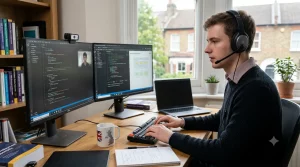
Programming and technology skills have created another area of online tutoring demand.
Tutors may teach coding languages, web development, basic programming concepts, spreadsheets, cybersecurity fundamentals or computer science.
Professionals working in technology can potentially convert their existing commercial experience into tutoring income without moving into formal classroom teaching.
Tutors should nevertheless ensure their knowledge is current because software and technical practices can change quickly.
9. Online Digital Skills Tutor
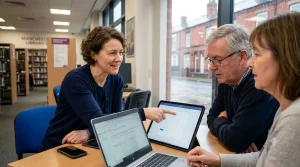
Digital skills tutoring is often aimed at adults who need practical help rather than academic examination preparation.
A tutor might teach people how to use email, office software, video conferencing, cloud tools, online banking safely or everyday digital services.
Sessions can also support employees who need to improve workplace technology skills.
This type of tutoring may therefore suit IT professionals, administrators and trainers as well as traditional teachers.
10. Online SEN And Study Skills Tutor
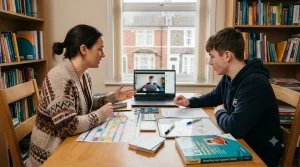
Tutors with relevant experience may specialise in helping students who need additional learning support or assistance with organisation and study skills.
Sessions might focus on breaking work into manageable stages, revision methods, confidence, literacy, numeracy or independent learning.
However, tutors should avoid presenting themselves as qualified to diagnose or treat learning, developmental or medical conditions unless they hold the appropriate professional credentials.
How Much Do Online Tutors Earn In The UK?
There is no fixed national tutoring wage.
The National Careers Service gives an indicative range of around £15 to £40 per hour, depending on experience, reputation and what is being taught.
Current platform figures show how wide the market can be. MyTutor advertises potential tutor earnings ranging from £13 to £120 per hour, depending on the work available and tutor level, while Superprof allows tutors to set rates and currently highlights a range of approximately £20 to £80 per hour.
A practical market guide could therefore look like this:
| Tutor Level | Indicative Hourly Range |
| New Or Entry-Level Tutor | £15–£25 |
| Experienced GCSE Tutor | £25–£40 |
| A-Level Or Specialist Tutor | £30–£50+ |
| Highly Experienced Specialist | £50–£80+ |
These are not guaranteed earnings. Subject demand, qualifications, reviews, platform deductions, preparation time and student availability all affect actual income.
London-based specialists may be able to charge more in some markets, although online tutoring makes location less important because tutors compete nationally.
Where Can You Find Online Tutoring Jobs?
Popular places to investigate include MyTutor, Tutorful, Superprof, GoStudent, Edumentors, TutorChase, TutorHouse, TutorExtra and Third Space Learning.
Requirements vary considerably.
For example, GoStudent states that applicants must be over 18 and complete its application and onboarding process, while Edumentors focuses heavily on university student tutors and allows approved tutors to set their own prices.
Never assume all platforms use the same fees or commission structure. Read the current tutor terms before accepting work because pricing models can change.
Platform Tutoring Vs Independent Tutoring
| Platform Tutoring | Independent Tutoring |
| Easier Access To Potential Students | Greater Control Over Your Business |
| Platform May Handle Payments | You Arrange Payments Yourself |
| Training Or Lesson Tools May Be Available | You Choose Your Own Teaching Tools |
| Platform Rules Apply | Greater Freedom Over Rates |
| Fees Or Commission May Apply | You Keep Revenue Before Your Own Costs |
| Less Marketing May Be Required | You Must Find Your Own Clients |
Platforms can be useful when starting because finding the first few students is often the hardest part.
Independent tutoring may become more attractive once a tutor has established referrals and a reputation.
Do Online Tutors Need To Register As Self-Employed?
Many independent and platform tutors operate as self-employed workers.
HMRC’s trading allowance covers up to £1,000 of gross trading income per tax year. If gross trading income exceeds £1,000, you will generally need to tell HMRC and register for Self Assessment.
Anyone moving into independent tutoring can check the process for registering as self-employed and understand how a UTR number works for Self Assessment.
The VAT registration threshold for 2026/27 is £90,000 of taxable turnover, not £85,000.
Some higher-earning sole traders also need to consider Making Tax Digital for Income Tax. From April 2026, it applies to qualifying individuals with combined self-employment and property income above £50,000 under the current rules.
What To Expect During Your First Few Months?
Online tutoring income may be inconsistent at first.
A new tutor may spend substantial unpaid time creating profiles, preparing lessons, answering enquiries and learning different platforms before establishing regular students.
Availability around evenings and weekends can help because this is when many school-age students require lessons.
Reviews and referrals become increasingly important. Tutors who respond quickly, prepare carefully and maintain consistent lesson quality are generally better positioned to turn occasional sessions into regular bookings.
It is sensible to treat early tutoring income conservatively rather than assuming every available hour will immediately become a paid lesson.
Conclusion
Online tutoring jobs in UK now cover far more than traditional maths and English tuition. Opportunities exist in academic subjects, languages, coding, digital skills and specialist learning support.
You do not automatically need QTS or a teaching degree to become a private tutor, but qualifications, safeguarding checks and proven subject knowledge can make it easier to secure students.
The strongest approach is to choose a subject you genuinely understand, establish the correct tax and safeguarding arrangements, compare tutoring platforms carefully and build experience gradually.
For many people, online tutoring can begin as flexible supplementary income and develop into a substantial freelance education business.
Frequently Asked Questions
Can I Become An Online Tutor Without A Degree?
Yes. There is no universal legal requirement for a private tutor to hold a degree, although individual platforms and specialist tutoring roles may require one.
Can University Students Become Online Tutors?
Yes. Several platforms actively recruit university students, particularly those with strong school results and expertise in high-demand subjects.
Is Online Tutoring Regulated In The UK?
Private tutoring does not operate under one universal professional licensing system. However, safeguarding, tax, data protection and platform-specific requirements may still apply.
Do I Need QTS To Tutor GCSE Students?
Not automatically for private tutoring. QTS relates principally to regulated teaching roles such as teaching in maintained schools in England.
Do Online Tutors Need A DBS Check?
Not every independent tutor is legally required to hold one. However, agencies, platforms and parents may expect an appropriate check when the tutor works with children.
How Much Can A Beginner Online Tutor Earn?
Beginners may commonly start around £15 to £25 per hour, although actual rates depend on the subject, platform, qualifications and demand.
What Equipment Do I Need For Online Tutoring?
A reliable computer, stable internet connection, webcam, microphone and quiet workspace are usually enough. Digital whiteboards and writing tablets can improve some lessons.
Is Online Tutoring Self-Employed Work?
It often is. Check your contract or platform terms because employment status depends on the arrangement. Self-employed tutors must also consider HMRC reporting requirements once their income reaches the relevant limits.
Leave feedback about this