







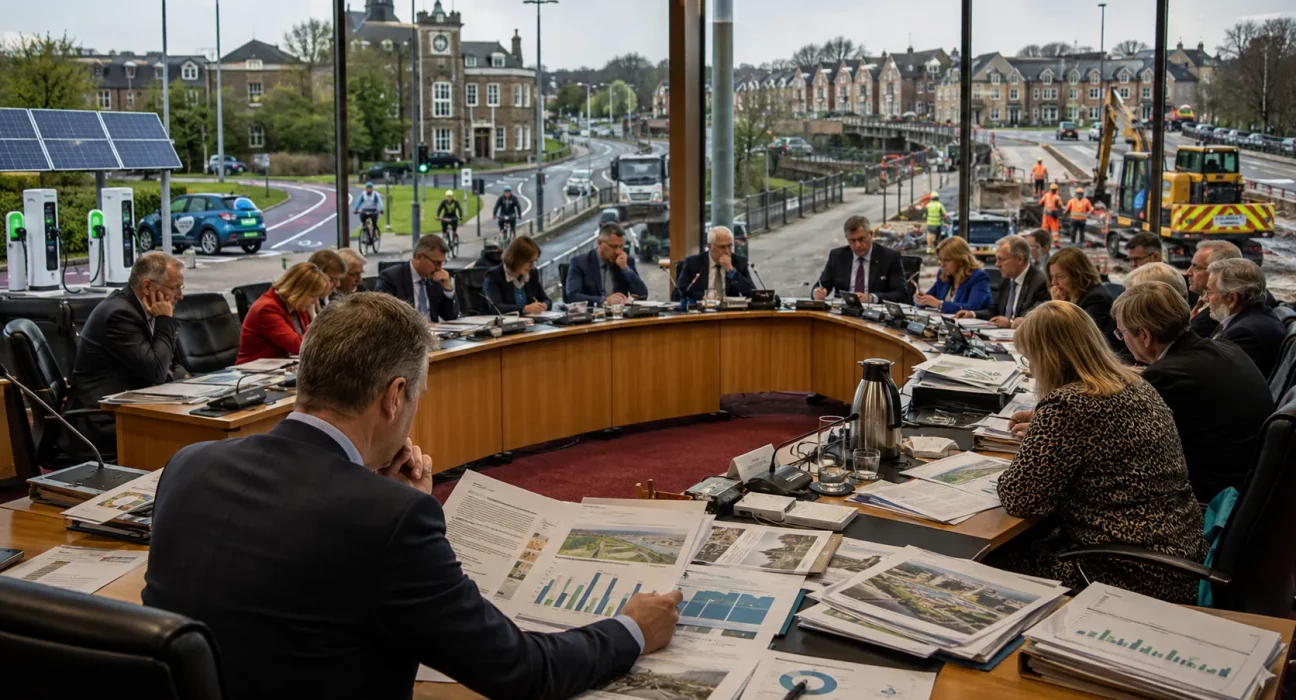
Reform UK-controlled councils are reversing local net zero targets, climate emergency declarations and green investment plans, triggering backlash from environmental groups, opposition parties and businesses concerned about uncertainty, procurement disruption and long-term economic impact.
Main Issue
Reform-led councils are scrapping or reviewing local climate commitments.
Supporters Say
The changes reduce costs and refocus councils on core public services.
Critics Warn
Rollbacks may weaken investment, green jobs and national climate progress.
Key Takeaways
- Several Reform UK-controlled councils have reviewed, removed or weakened local net zero policies.
- Climate emergency declarations, carbon targets and green infrastructure schemes are among the affected policies.
- Supporters argue the rollback protects taxpayers and redirects money towards essential services.
- Opponents say the changes could create business uncertainty and reduce long-term economic benefits.
- Businesses in affected areas should review contracts, funding sources and procurement language.
Policy Impact Table
| Policy Area | What Is Changing? | Potential Business Impact |
|---|---|---|
| Net Zero Targets | Local carbon neutrality deadlines are being removed or reviewed. | Reduced certainty for firms planning green investment. |
| Climate Declarations | Some councils are rescinding climate emergency declarations. | May alter local priorities and procurement criteria. |
| Green Projects | EV, solar and energy-efficiency schemes may face delays or cancellation. | Contractors and suppliers could face disrupted project pipelines. |
| Council Spending | Budgets are being redirected towards core services. | New opportunities may favour cost-saving and efficiency-led proposals. |
Why Are Reform UK Councils Scrapping Net Zero Targets?
The rapid rollback of local climate policies by Reform UK-controlled councils represents one of the most significant shifts in local government policy seen in recent years. Following major gains in local elections during 2025 and 2026, Reform UK has moved quickly to implement a key element of its national platform: opposition to net zero policies and what it describes as costly environmental bureaucracy.
For supporters, these changes are about restoring focus to core council responsibilities. For critics, they represent a major step backwards in climate action, economic development, and long-term infrastructure planning.
What makes the issue particularly important is that local authorities play a crucial role in shaping investment decisions, housing developments, transport infrastructure, energy projects, and procurement strategies. As a result, the impact extends far beyond environmental policy and into the wider business and economic landscape.
While Reform UK argues that taxpayers are funding unnecessary climate initiatives during a period of intense financial pressure, opponents contend that many of these programmes generate long-term savings, create jobs, and attract investment into local communities.
The debate is no longer simply about climate policy. It is increasingly becoming a debate about economic priorities, public spending, local governance, and the future direction of regional development across England.
Which Green Policies Are Being Removed Across Reform-Controlled Councils?
The policy changes being implemented by Reform-controlled councils extend far beyond symbolic gestures or political messaging. Several authorities have initiated formal reviews, suspended programmes, or voted to remove climate-related commitments altogether.
Among the most common actions are:
- Removal of local net zero targets
- Reversal of climate emergency declarations
- Suspension of climate action plans
- Reviews of green infrastructure spending
- Audits of environmental staffing and consultancy roles
- Changes to procurement frameworks linked to decarbonisation
- Replacement of climate-focused terminology in strategic documents
According to research from the LSE Grantham Research Institute, seven out of nine Reform-led councils elected in 2025 had already removed or significantly altered climate-related commitments by early 2026.
One notable trend is the removal of language such as “Net Zero”, “Climate Emergency”, “Climate Change”, and “Decarbonisation” from official council documents. In many cases, these terms are being replaced with alternatives such as “energy efficiency”, “value for money”, and “local energy security”.
For businesses operating within these local authority areas, the shift signals a significant change in how future projects may be assessed and funded.
Which Councils Have Already Rolled Back Climate Commitments?
Several local authorities have emerged as leading examples of Reform UK’s approach to environmental policy.
Perhaps the most high-profile example is Essex County Council, where approximately £47.5 million of climate-related funding was reportedly frozen or placed under review. Meanwhile, Suffolk County Council moved away from a green energy tariff, claiming annual savings of around £175,000.
These decisions reflect a consistent theme across Reform-led authorities: prioritising immediate financial considerations over long-term climate objectives.
Is Scrapping Net Zero Really Saving Taxpayers Money?

The financial argument sits at the centre of Reform UK’s policy agenda.
Council leaders supporting the rollbacks argue that environmental initiatives often require significant spending on consultants, reporting frameworks, compliance activities, and infrastructure projects that do not always deliver immediate benefits to residents.
Supporters of the changes point to growing pressure on local authority budgets. Councils across England face rising costs linked to adult social care, special educational needs provision, housing support, and essential infrastructure maintenance.
From this perspective, every pound spent on climate programmes is a pound unavailable for frontline services.
Reform figures frequently frame the debate around priorities. Their position is that local government should focus on repairing roads, supporting vulnerable residents, managing waste collection, and maintaining public services before investing in ambitious environmental targets.
However, critics argue that this analysis overlooks the longer-term financial benefits of many climate initiatives.
Opposition politicians and environmental advocates have highlighted examples where energy efficiency upgrades, renewable energy projects, and sustainability programmes have generated substantial savings over time. In Suffolk, critics pointed to figures suggesting that previous net zero initiatives delivered approximately £4 million in savings during the preceding financial year.
The central disagreement therefore revolves around timescales.
Supporters focus on immediate budget relief.
Critics focus on long-term economic returns.
Why Are Businesses Concerned About Reform UK Council Green Policies?
While the political debate often focuses on climate change, businesses are more likely to focus on certainty.
Companies invest based on predictable policy environments. When local authorities suddenly alter strategic priorities, businesses can find themselves reassessing investment decisions, staffing plans, and future growth opportunities.
The renewable energy sector is among the most directly affected.
Developers involved in solar projects, energy efficiency schemes, battery storage installations, and electric vehicle infrastructure often rely on local authority partnerships. When councils suspend projects or review climate commitments, those businesses may face delays, cancellations, or reduced opportunities.
Construction firms may also feel the impact.
Many building projects now incorporate sustainability requirements linked to local climate action plans. If councils remove or revise those requirements, procurement processes may change significantly.
Investors are also monitoring developments closely.
Institutional investors generally favour stable policy environments. Political volatility can increase perceived risk and influence where investment capital is allocated. Critics argue that councils abandoning long-term environmental strategies may inadvertently discourage investment into local infrastructure and regeneration projects.
Are Reform Councils Creating Legal and Regulatory Risks?
A key distinction often overlooked in public debate is that local councils do not control national climate legislation.
The United Kingdom remains legally committed to achieving net zero emissions by 2050 under the Climate Change Act 2008. Local councils are not allowed to alter national law, although they may decide to eliminate voluntary targets.
This creates a potentially complex situation.
National government agencies continue to pursue legally enforceable environmental goals while some municipal governments abandon climate-focused measures.
Policy experts have raised concerns that conflicting priorities between local and national government could create challenges for planning decisions, infrastructure development, and environmental compliance.
There are also questions about planning appeals.
If councils attempt to block certain renewable energy developments while national policy remains supportive, there is a possibility that planning inspectors could overturn local decisions, potentially creating additional costs for taxpayers.
Could Scrapping Local Net Zero Targets Affect the UK’s 2050 Climate Goal?
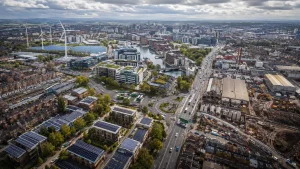
The answer depends largely on the role local government plays in delivering national objectives.
Local authorities influence numerous areas that directly affect emissions, including:
- Housing development
- Transport infrastructure
- Public buildings
- Energy efficiency programmes
- Planning approvals
- Waste management
Although local targets are voluntary, climate experts argue that councils provide much of the practical implementation needed to support national climate ambitions.
The LSE Grantham Research Institute has warned that widespread removal of local climate commitments could make it more difficult for central government to achieve statutory emissions reduction targets.
Supporters of Reform UK’s approach reject this argument, maintaining that local authorities should focus on efficient service delivery rather than pursuing ambitious climate agendas.
The disagreement reflects a broader national debate about how climate policy should be implemented and who should bear the costs.
What Does the Backlash Reveal About the Future of Local Climate Policy?
The reaction to Reform UK’s policy changes has been swift and often intense.
Environmental groups have accused councils of abandoning climate leadership at a time when many communities are already experiencing the effects of extreme weather and rising energy costs.
Political opposition has also been strong.
Labour and Green Party representatives have criticised the rollbacks, arguing that they undermine investment opportunities and threaten long-term economic resilience. Trade unions have raised concerns regarding potential staffing reductions linked to reviews of environmental departments and programmes.
Community groups have organised demonstrations and public campaigns in response to some council decisions.
The scale of the backlash suggests that climate policy remains one of the most politically sensitive issues facing local government.
How Could These Policy Changes Affect Local Economies?
The economic impact of these decisions remains uncertain and will likely vary between regions.
One area receiving particular attention is employment.
The low-carbon economy supports thousands of jobs across construction, engineering, manufacturing, and professional services. Critics argue that reduced council investment could slow growth within these sectors.
Supporters counter that resources can instead be directed towards services residents consider more urgent.
The outcome will ultimately depend on how councils choose to reallocate savings and whether alternative investment opportunities emerge.
What Should Businesses Do If They Operate in Reform-Controlled Council Areas?

For businesses, adapting to changing political priorities is often more productive than resisting them.
Companies bidding for council work should carefully review how local authorities describe their objectives and procurement criteria.
Policy experts increasingly recommend framing proposals around:
- Operational savings
- Asset efficiency
- Energy security
- Waste reduction
- Value for money
- Long-term cost control
rather than relying solely on net zero language.
Businesses should also review contracts linked to climate-related funding.
Projects supported by ring-fenced national grants may remain protected even when local political priorities change.
Robust contract management and risk assessment processes are becoming increasingly important, particularly for suppliers involved in long-term infrastructure projects.
What Can Businesses Learn From Early Policy Reversals?
Consider a regional renewable energy contractor that secured a pipeline of council-backed solar installation projects.
The business recruits staff, invests in equipment, and expands operations based on expected project delivery.
A change in political leadership then triggers a review of those projects.
Even if only some projects are cancelled, the uncertainty can affect staffing decisions, investment plans, supply chain arrangements, and revenue forecasts.
This scenario highlights a broader lesson.
Businesses operating in politically sensitive sectors should avoid becoming overly dependent on a single funding stream, policy framework, or local authority programme.
Diversification remains one of the most effective forms of risk management.
What Happens Next for Reform UK Council Green Policies?
The policy changes seen so far may only represent the beginning of a broader shift.
With Reform UK expanding its local government footprint, more councils may review environmental commitments in the coming years. At the same time, national climate obligations remain firmly in place.
This tension between local political priorities and national policy objectives is likely to shape future debates around planning, infrastructure investment, energy security, and economic development.
For businesses, investors, and policymakers, the key challenge will be navigating an increasingly fragmented policy environment.
Conclusion
The rollback of local climate commitments by Reform-controlled councils has become one of the most significant local government policy developments in England.
Supporters view the changes as a practical response to financial pressures, arguing that councils should prioritise essential services and taxpayer value. Critics believe the decisions risk undermining investment, weakening long-term economic resilience, and creating barriers to achieving national climate objectives.
What is clear is that the debate extends far beyond environmental policy. It touches on public spending, economic growth, infrastructure planning, business confidence, and the future role of local government itself.
As more councils reconsider their climate commitments, businesses will need to remain alert, adaptable, and informed. Whether these policy changes ultimately deliver savings or create new challenges will become clearer in the years ahead.
FAQs
Can a local council legally remove a net zero target?
Yes. Local net zero targets are typically voluntary commitments adopted by councils and can be amended or removed through local decision-making processes.
Which Reform UK councils have scrapped climate emergency declarations?
Councils including Suffolk, Kent, and Durham have reviewed or moved to reverse climate emergency declarations as part of broader policy changes.
Does removing local climate targets affect national net zero laws?
No. The UK’s legal commitment to reach net zero by 2050 remains unchanged under the Climate Change Act 2008.
What happens to green grants when projects are cancelled?
The outcome depends on funding conditions. Some grants are ring-fenced and may require repayment if projects are abandoned.
Could businesses lose council contracts because of these policy changes?
Potentially. Project reviews, procurement changes, and altered spending priorities may affect future contract opportunities.
Are councils legally required to have climate action plans?
Generally, no. Most climate action plans are voluntary, although councils remain subject to wider legal and planning obligations.
How are renewable energy companies responding?
Many firms are reassessing investment plans and monitoring council decisions closely due to increased policy uncertainty.
What should businesses do if local environmental policies suddenly change?
Businesses should review contracts, assess funding risks, diversify revenue sources, and align proposals with revised council priorities.