







Last Updated on 29.09.2026
At 11, children in the UK generally cannot take a normal part-time job with an employer. Standard part-time employment usually begins at 14, although some local councils allow certain types of light work from age 13.
Children under 14 can also take part in areas such as television, theatre and modelling where the appropriate performance licence is obtained.
That does not mean an 11-year-old has no way to earn money. There are plenty of small, age-appropriate activities that can be completed at home or with relatives, family friends and trusted neighbours under adult supervision.
These opportunities can help children understand saving, budgeting, responsibility and the value of money without treating them like adult workers.
Can 11 Year Olds Legally Work in the UK?
An 11-year-old normally cannot be employed in an ordinary part-time job in the UK. In England and Wales, employing a child under 13 is generally unlawful unless the child is taking part in an approved performance, paid sporting activity or modelling assignment with the necessary licence.
This distinction is important. Helping parents with additional household tasks for pocket money is very different from being employed by a shop, restaurant or other business.
Parents should therefore focus on informal, supervised earning opportunities that are suitable for the child’s age.
Children approaching their teenage years can also see how opportunities change by reading about jobs for 12 year olds before considering formal work later.
Top 12 Jobs for 11 Year Olds to Make Money
1. Extra Household Jobs

Extra household jobs are one of the easiest ways for an 11-year-old to earn money because parents can choose safe tasks and supervise them at home. Rather than paying children for every normal responsibility, parents could agree to pay for additional jobs that require extra effort.
Suitable tasks include:
- Vacuuming Rooms
- Dusting Furniture
- Folding And Putting Away Laundry
- Emptying Bins
- Organising Cupboards
- Helping With A Larger Clean-Up
Average earnings: Current UK data shows children receive around £1.03 for vacuuming and £1.22 for dusting on average.
Parents can set different amounts depending on the size and difficulty of each task. This is also a simple way to teach children that completing agreed work properly can result in a financial reward.
2. Gardening Helper

Gardening is a good seasonal earning opportunity, particularly during spring, summer and autumn. An 11-year-old can help parents, grandparents or trusted neighbours with straightforward garden maintenance while an adult handles potentially dangerous equipment.
They could help with:
- Watering Flowers
- Pulling Safe Weeds
- Collecting Fallen Leaves
- Sweeping Paths
- Planting Flowers
- Gathering Small Branches
Average earnings: Gardening pays around £1.38 per completed job according to the 2026 Rooster Money Pocket Money Index.
Larger garden jobs could earn more if parents agree beforehand. Children should not use lawnmowers, hedge trimmers, chemicals or sharp powered equipment without suitable adult involvement.
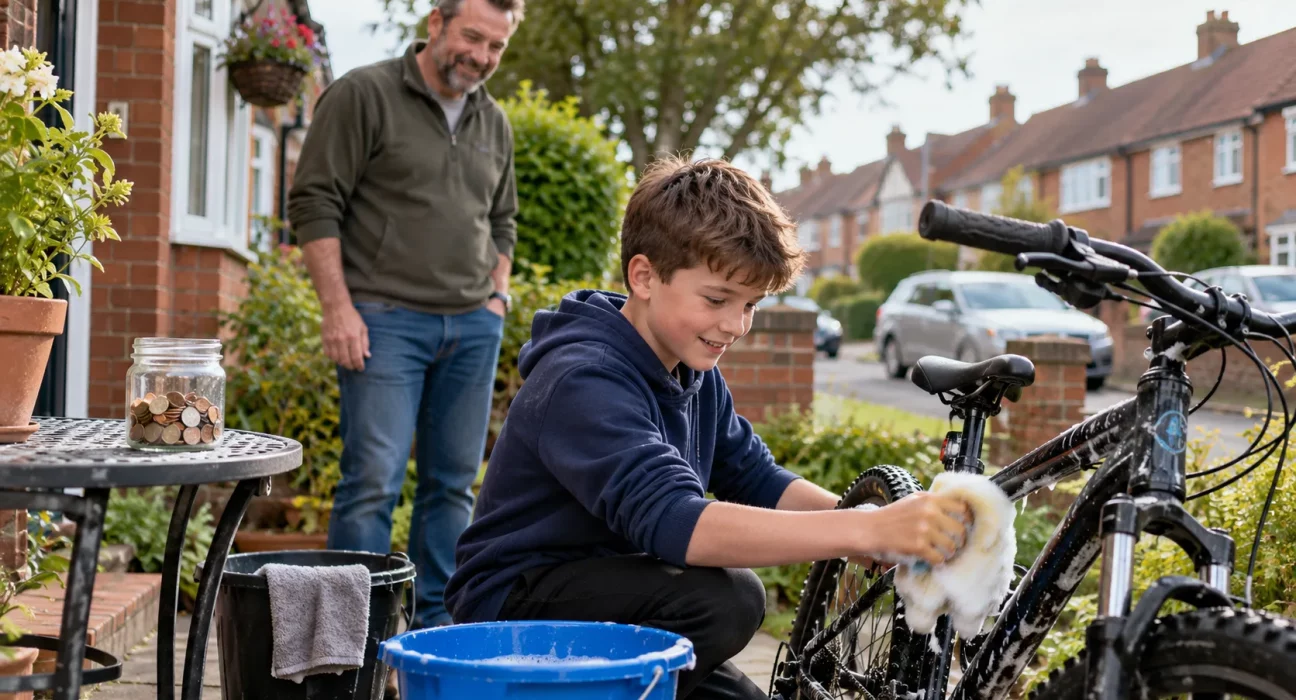
3. Car Washing

Car washing can be one of the better-paying pocket-money tasks for children. An 11-year-old could clean a parent’s car or, with parental supervision, cars belonging to relatives and trusted neighbours.
Tasks may include:
- Washing Exterior Panels
- Cleaning Wheels
- Rinsing The Vehicle
- Drying The Car
- Cleaning Floor Mats
- Removing Rubbish From Inside
Average earnings: UK children earn approximately £3.36 for cleaning a car, making it one of the higher-paying common chores.
A family may choose to pay more for a particularly large vehicle or a more detailed clean. Children should always work somewhere safely away from moving traffic.
4. Pet Care Helper

Children who enjoy animals could earn money by helping care for family pets or pets belonging to people their parents know well.
An 11-year-old could:
- Refill Water Bowls
- Prepare Pet Food
- Brush Friendly Pets
- Clean Simple Pet Areas
- Help Organise Pet Supplies
- Accompany An Adult On Dog Walks
Average earnings: Dog walking currently earns children about £1.15 per task on average.
An 11-year-old should not be expected to independently control a large, unfamiliar or unpredictable dog. For younger children, pet care is better treated as a supervised activity rather than a professional pet-sitting service.
5. Craft Maker

Creative children can turn a hobby into a small money-making project with parental help. Handmade products could be sold to relatives, at suitable community events or through an online account operated by a parent.
Potential products include:
- Friendship Bracelets
- Handmade Cards
- Bookmarks
- Keyrings
- Painted Decorations
- Seasonal Crafts
Estimated earnings: Around £1 to £5 profit per item may be achievable depending on materials, quality and selling price.
For example, if materials for a bracelet cost £1 and it sells for £3, the child has made £2 before considering any additional expenses. This provides a useful introduction to pricing, costs and profit without requiring the child to operate a formal business.
6. Gift Wrapping Helper

Gift wrapping can work particularly well around birthdays, Christmas and other celebrations. An 11-year-old who is careful and creative could help parents and relatives prepare presents.
Activities may include:
- Wrapping Boxes
- Preparing Gift Bags
- Adding Ribbon
- Making Gift Tags
- Organising Presents
- Sorting Wrapping Materials
Estimated earnings: Around 50p to £2 per present, or an agreed amount such as £3 to £8 for wrapping several gifts.
The amount can vary depending on the size and complexity of the presents. Children can also learn to estimate how much wrapping paper and other materials are required for a job.
7. Photography Helper

Photography is better viewed as a skill-building opportunity at age 11 rather than professional employment. However, a child with an interest in photography could complete small projects for family members and earn occasional pocket money.
They might photograph:
- Family Pets
- Flowers And Gardens
- Birthday Decorations
- Handmade Products
- Family Events
- Nature And Outdoor Scenes
Estimated earnings: Family members might offer around £2 to £10 for a small photography project, although there is no standard rate.
Parents should supervise any use of social media, websites or online photo services. Images containing other people should not be publicly shared without appropriate permission.
As the child’s skills improve, photography could develop into a more valuable creative skill later.
8. Writing And Story Creation

Children who enjoy English and storytelling can use those interests to create personalised content for family members.
Possible projects include:
- Short Stories
- Poems
- Birthday Stories
- Family Newsletters
- Simple Children’s Books
- Personalised Story Cards
Estimated earnings: A family member might pay around £1 to £5 for a finished creative project, depending on its length and effort.
Parents could also create challenges, such as paying an agreed amount for producing a short illustrated story or family newsletter.
The real value at this age is not necessarily the money. Writing regularly can strengthen vocabulary, communication, spelling and creativity while teaching children to complete a project from beginning to end.
9. Tech Helper for Family Members

Many 11-year-olds are comfortable using phones, tablets and computers and may be able to help less technically confident relatives with basic tasks.
They could assist with:
- Organising Digital Photos
- Explaining Video Calls
- Showing Basic Phone Features
- Connecting Simple Devices
- Organising Computer Files
- Helping With Printer Settings
Estimated earnings: Relatives might offer around £2 to £5 for a small task or simply provide some additional pocket money as a thank-you.
Children should never handle someone’s banking information, passwords, financial accounts or sensitive personal documents. This opportunity works best with grandparents and other trusted relatives rather than members of the public.
10. Selling Unwanted Toys, Books And Games

Decluttering can help children earn money while teaching them that unused belongings can still have value.
An 11-year-old can go through possessions with a parent and identify items they no longer need, such as:
- Toys
- Books
- Board Games
- Children’s Clothes
- Collectables
- Sports Equipment
Estimated earnings: Individual items might sell for £1 to £20 or more, depending on their original value, condition and demand.
The child can help clean the item, take photographs and decide on a suggested price, but an adult should control online marketplace accounts, buyer communication, payments and collections.
It also creates a useful opportunity to discuss saving rather than immediately spending everything earned.
11. Bake Sale Helper

Children interested in cooking may enjoy helping an adult make cakes, biscuits or other simple products for an appropriate school, community or family event.
An 11-year-old could help with:
- Measuring Ingredients
- Mixing Ingredients
- Decorating Cakes
- Preparing Packaging
- Displaying Products
- Calculating Basic Costs
Estimated earnings: At a small supervised event, individual cakes or biscuits might sell for around 50p to £2 each, although actual profit depends on ingredient and packaging costs.
For example, spending £6 on ingredients and collecting £15 from sales would leave £9 before any other costs. An adult should supervise ovens, hot surfaces and sharp equipment and check any relevant food hygiene, allergy and event requirements before food is offered for sale.
12. Acting, Modelling And Performing

Acting, modelling and performing are unusual because they can offer genuine paid opportunities to children who would otherwise be too young for ordinary employment.
Possible work includes:
- Television Roles
- Film Appearances
- Theatre Productions
- Modelling Work
- Commercial Productions
- Other Paid Performances
Potential earnings: There is no single average rate. Payment can range significantly depending on the production, role, agency arrangements and length of the assignment.
Children taking part in certain paid performances or modelling assignments may require a child performance licence from their local council. Parents should deal with reputable organisations, understand any fees or contracts and check licensing arrangements before agreeing to work.
For an 11-year-old interested in performing, the primary focus should still be enjoyment, experience and education rather than expecting a regular income.
How Much Can an 11 Year Old Get Paid?
There is no standard hourly wage that an 11-year-old should receive for informal household or family tasks. School-aged children below 16 are also not entitled to the National Minimum Wage.
For informal activities, parents can instead agree on a reasonable amount based on:
- How Difficult The Task Is
- How Long It Takes
- Whether Materials Are Required
- How Often The Job Is Completed
- The Child’s Level Of Responsibility
For example, a quick household job might earn a small amount, while completing a larger supervised project could justify more.
The focus should be on developing good money habits rather than maximising earnings.
How Can Parents Help an 11 Year Old Find Safe Ways to Earn?
At this age, opportunities should normally come through people the family already knows. Parents can begin with relatives, close family friends and trusted neighbours rather than encouraging children to advertise themselves publicly.
A few basic rules can make earning safer:
- Know Who The Child Is Helping
- Keep Tasks Close To Home
- Supervise Activities Where Appropriate
- Agree The Task Before Money Is Discussed
- Avoid Dangerous Equipment
- Protect Personal Information
- Manage Online Accounts For The Child
- Never Allow Meetings With Unknown Buyers Alone
As children become older, the employment options change significantly. At age 13, some councils permit certain categories of light part-time employment, so families planning ahead may find the rules around jobs for 13 year olds useful.
Do Children Need a Work Permit?
For an ordinary employed position, local rules become particularly important from age 13.
A business employing a school-aged child may need a child work permit from the relevant local authority. Local councils can also restrict which categories of light work children are permitted to undertake.
Employers may need information including:
- Details About The Child
- Details About The Employer
- The Type Of Work
- Expected Working Hours
- Parental Agreement
- Evidence That The Work Is Safe
Parents should therefore check their own council’s child-employment rules instead of assuming that rules are identical everywhere. An 11-year-old will generally be too young for this type of standard employment.
What Should an 11 Year Old Do With the Money They Earn?
Earning even a small amount creates an opportunity to teach basic financial skills.
One simple approach is to divide money into three categories:
- Spend For Small Things The Child Wants Now
- Save For A More Expensive Future Purchase
- Give For Gifts, Charity Or Something The Child Cares About
Parents can also help children keep a basic earnings record showing the job completed, date and payment received. This turns pocket-money activities into an early lesson in budgeting and financial planning.
What Jobs Should 11 Year Olds Avoid?
Not every money-making idea found online is suitable for a child. An 11-year-old should avoid activities that involve unnecessary danger, unsupervised contact with strangers or responsibilities beyond their age.
Examples include:
- Working In Shops Or Restaurants As A Normal Employee
- Using Power Tools
- Working Near Busy Roads Alone
- Walking Unfamiliar Dogs Alone
- Entering Strangers’ Homes Without A Parent
- Handling Other People’s Financial Accounts
- Responding To Unknown Online Customers
- Using Adult Freelancing Platforms Independently
- Sharing Personal Information Publicly
Parents should be cautious about any website promising children quick or unusually large amounts of money.
As teenagers become older, their choices gradually expand. For comparison, there are considerably more conventional employment opportunities among jobs for 17 year olds once young people are approaching adulthood.
Conclusion
Finding jobs for 11 year olds in the UK requires a different approach from finding employment for an older teenager.
At 11, children generally cannot take an ordinary part-time job, so parents should focus on safe, informal and closely supervised ways of earning money.
Household jobs, gardening, car washing, crafts, writing, photography, family tech help and selling unwanted belongings can all introduce children to responsibility without placing them in inappropriate working situations.
The amount earned is less important than the skills developed. Learning to complete an agreed task, manage money, save towards a goal and understand the difference between revenue and costs can provide valuable experience long before a child enters formal employment.
Frequently Asked Questions
Can an 11 Year Old Get a Part-Time Job in the UK?
Generally, no. Ordinary part-time employment normally begins at 14, although some local councils permit certain light employment from age 13. Children under 14 can participate in areas such as television, theatre and modelling when the appropriate licensing requirements are satisfied.
Can an 11 Year Old Earn Pocket Money?
Yes. Parents can create age-appropriate opportunities such as additional household jobs, supervised gardening, car washing, crafts or helping with family projects. These should not be confused with formal employment.
Does an 11 Year Old Get Minimum Wage?
No. School-aged children below 16 are not entitled to the National Minimum Wage.
Can an 11 Year Old Work Online?
Children should not independently join adult work platforms or create accounts that breach a platform’s age requirements. Where an online creative activity is appropriate, parents should supervise it and manage accounts, payments and communication.
Can an 11 Year Old Work for a Family Business?
Parents should not assume that being family-owned removes child-employment restrictions. If the arrangement amounts to employment, legal and local council rules can still apply. Families should check their council’s requirements before giving an 11-year-old regular duties within a business.
What Is the Safest Job for an 11 Year Old?
Additional paid household tasks are among the simplest options because parents can control the environment, choose appropriate work and supervise the child. Gardening assistance, car washing, crafts and family projects can also work well when suitable safety precautions are followed.
Leave feedback about this