







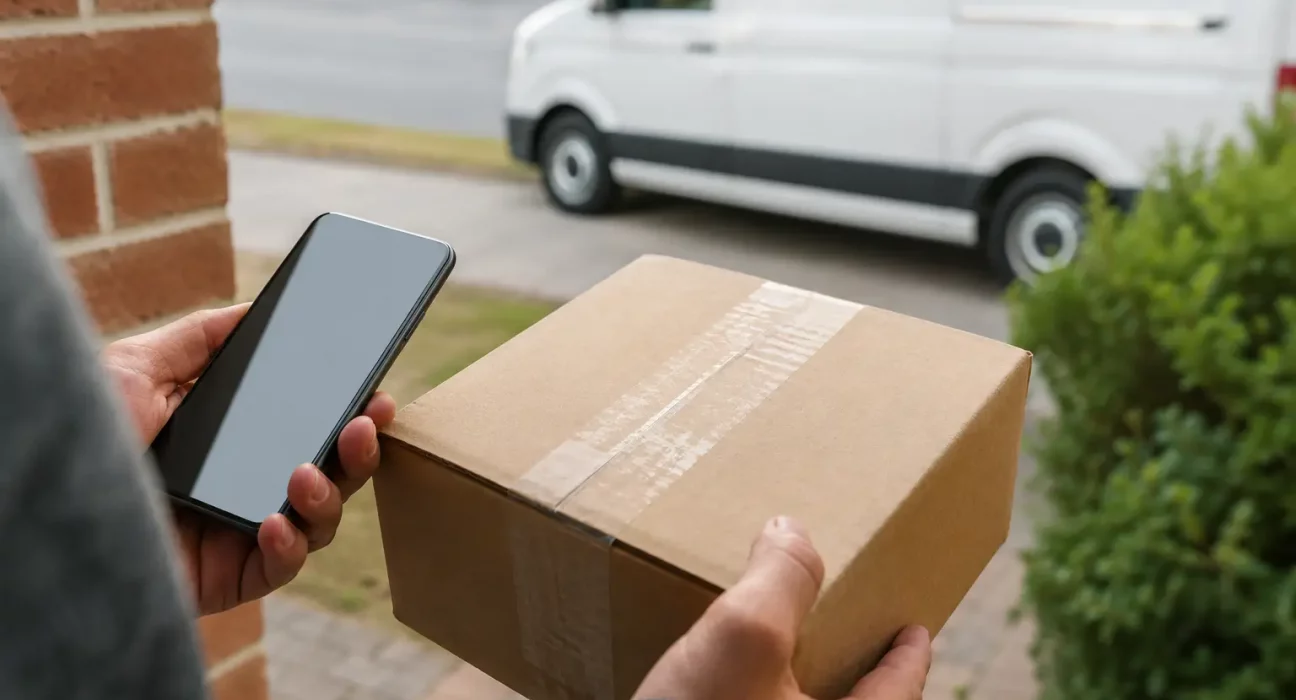
Receiving a parcel notification from a company you do not recognise can be confusing. This is why some UK consumers search for Etarget Limited after seeing the name on a tracking notification, delivery update or parcel label.
There is an active UK company called E-TARGET LIMITED, company number 07242152. However, an important distinction needs to be made. The official Companies House record classifies this company under management consultancy activities other than financial management, rather than parcel delivery or fulfilment.
Therefore, finding E-TARGET LIMITED on Companies House does not, by itself, prove that this particular registered company sent a parcel displaying the Etarget Limited name.
If you have received an unfamiliar delivery, the best approach is to verify the tracking information independently, compare it with your recent purchases and avoid clicking suspicious links.
Etarget Limited: Quick Research Snapshot
| Information | Details |
|---|---|
| Registered company | E-TARGET LIMITED |
| Company number | 07242152 |
| Company status | Active |
| Incorporated | 4 May 2010 |
| Company type | Private limited company |
| Registered office | White Colne, Essex |
| SIC code | 70229 |
| Registered activity | Management consultancy activities other than financial management |
| Latest accounts | Made up to 31 May 2025 |
| Current director | Christine Frances Joyce |
The key point is that these details relate specifically to E-TARGET LIMITED, company number 07242152. They should not automatically be used to identify the sender of an individual parcel.
What Is Etarget Limited?

E-TARGET LIMITED is an active private company registered in England and Wales.
Companies House records show that the company was incorporated on 4 May 2010 and remains active.
However, consumers searching for Etarget Limited are often looking for something different. They may have seen the name associated with a parcel, tracking number or delivery notification and want to know why it appeared.
This creates two separate questions:
Is there a UK company called E-TARGET LIMITED?
Yes.
Is that registered company necessarily responsible for every parcel displaying the Etarget Limited name?
That cannot be established simply from the company name.
This distinction is important because unfamiliar business names can appear at different stages of modern e-commerce and delivery processes.
Is Etarget Limited a Registered UK Company?
Yes. E-TARGET LIMITED is registered with Companies House under company number 07242152.
Its registered office is listed as:
Peershaws
Berewyk Hall Court
White Colne
Essex
CO6 2QB
The company was incorporated on 4 May 2010.
Its latest filed accounts cover the period ending 31 May 2025, while its next accounts are due by 28 February 2027.
The existence of these records confirms that E-TARGET LIMITED is a registered legal entity.
However, Companies House registration should not be treated as evidence that a particular parcel, text message or tracking notification came from that company.
What Does E-TARGET LIMITED Do According to Companies House?
This is one of the most important details to understand.
Companies House records E-TARGET LIMITED under SIC code:
70229 – Management consultancy activities other than financial management
This is significant because some online discussions have associated the Etarget Limited name with parcel fulfilment, logistics, warehousing or e-commerce deliveries.
The official SIC classification does not describe company number 07242152 as a courier, postal operator or warehousing business.
A SIC code does not necessarily provide a complete description of everything a business does. However, without additional reliable evidence, it would also be incorrect to state that the registered E-TARGET LIMITED definitely operates a parcel fulfilment network.
Consumers should therefore separate verified company information from assumptions based on an unfamiliar name appearing on a parcel.
Who Owns Etarget Limited?
Companies House currently records Christine Frances Joyce as an active person with significant control over E-TARGET LIMITED.
She is recorded as holding 75% or more of the company’s shares and voting rights and having the right to appoint or remove directors.
Christine Frances Joyce is also listed as the company’s current director.
Stephen Joyce was previously a director but resigned on 25 October 2025.
These records help establish who controls the registered business, but they do not identify who sent a particular parcel.
Why Am I Getting a Parcel From Etarget Limited?

There can be several reasons why an unfamiliar business name appears during the delivery process.
Modern online shopping can involve more companies than the retailer and courier that the customer immediately recognises.
For example, a typical purchase might involve an online marketplace, third-party seller, warehouse, software provider, dispatch operation and final delivery company.
The business name shown at one stage of this process may therefore differ from the retailer name displayed when the purchase was made.
If you regularly buy products online, understanding how different parcel delivery companies in the UK operate can help explain why several organisations may become involved between checkout and final delivery.
However, an unfamiliar name alone does not establish that a particular company acted as the fulfilment provider.
The safest approach is to investigate the individual shipment.
Why Might a Different Company Name Appear on Parcel Tracking?
Consumers usually remember the shop or website where they placed an order.
They may not know which businesses handle the product after checkout.
For example, a retailer may use an external warehouse. The warehouse could use separate shipping software, while another company may handle the final delivery.
As a result, the sender or dispatch name visible to the courier may not be identical to the retailer’s trading name.
This can make a perfectly expected parcel initially look unfamiliar.
At the same time, you should not assume every unfamiliar tracking notification is genuine.
The tracking reference and your original order information are much more useful than the sender name alone.
Why Does Etarget Limited Appear With Royal Mail?
Some consumers specifically search for terms such as Etarget Limited Royal Mail after seeing the two names associated with the same delivery.
There can be different organisations involved before a parcel enters a courier’s delivery network.
However, the public Companies House record for E-TARGET LIMITED does not establish that company number 07242152 has an official partnership with Royal Mail.
If your notification says Royal Mail is handling the parcel, the safest approach is to open Royal Mail’s official website independently and enter the tracking number there.
Do not rely on an unexpected text-message link.
If the parcel is genuine, Royal Mail’s tracking system should provide the available information for that tracking reference.
Consumers expecting deliveries may also find it useful to understand what time Royal Mail stops delivering, particularly when tracking shows an item is due that day.
Is Etarget Limited a Scam?
The existence of an unfamiliar sender name does not automatically mean you are dealing with a scam.
E-TARGET LIMITED, company number 07242152, is an active registered UK company.
However, this fact should not be used to authenticate an individual parcel message.
Fraudsters can impersonate legitimate businesses, delivery companies and well-known organisations. A scam text can contain the name of a real company without having any connection to that business.
Therefore, asking only whether Etarget Limited is a real company does not fully address the risk.
A better question is:
Is this specific parcel or tracking notification genuine?
That can be investigated using the tracking number, your order history and the courier’s official website.
How Can You Check an Etarget Limited Tracking Notification?
If you receive an unexpected notification, avoid clicking the link immediately.
First, look at the courier named in the message.
Visit that courier’s website yourself rather than accessing it through the message.
Enter the tracking reference manually.
Next, compare the information with your recent online purchases.
Look through order confirmation emails and marketplace accounts to see whether the tracking number matches an order you recognise.
If you are expecting something through Royal Mail, knowing how Royal Mail parcel tracking and delivery works can also help you understand how tracking updates are provided.
The important point is to reach the courier through a trusted route rather than an unsolicited link.
What Should You Do If You Receive an Unexpected Etarget Limited Parcel?
Receiving a parcel you do not remember ordering can be concerning, but there are several ordinary explanations.
You may have forgotten about an older purchase, particularly if delivery took several weeks.
Another member of your household may have ordered the product.
It could also be a gift, replacement item, delayed shipment, subscription product or duplicate delivery.
Start by checking:
- Recent online orders
- Marketplace purchase histories
- Dispatch and confirmation emails
- Bank and card transactions
- Purchases made by other household members
- The courier’s official tracking system
If you still cannot identify the parcel, contact the retailer or courier through contact information obtained independently.
Never provide card details, passwords or sensitive personal information simply because someone contacts you about an unexpected delivery.
Could an Unexpected Parcel Be a Brushing Scam?
An unexpected parcel could potentially be associated with brushing, but receiving something you did not order does not prove this has happened.
A brushing scheme generally involves products being sent to addresses without a genuine customer purchase, sometimes as part of attempts to create apparently legitimate transactions or reviews.
However, there are many simpler explanations for an unexpected parcel.
These include:
- Gifts
- Delivery errors
- Forgotten orders
- Replacement products
- Duplicate shipments
- Household purchases
- Subscription deliveries
Therefore, investigate the parcel before reaching a conclusion.
What Companies Use Etarget Limited?
Consumers naturally want to identify the retailer behind an unfamiliar parcel.
However, there does not appear to be a reliable publicly verified list demonstrating which retailers or marketplaces use E-TARGET LIMITED, company number 07242152, for parcel fulfilment.
This is an important limitation.
Online discussions may associate the Etarget name with purchases from particular marketplaces or retailers, but consumer reports do not establish a formal business partnership.
Unless the retailer, marketplace or company confirms the relationship, these associations should not be presented as verified facts.
Is Etarget Limited Connected to Amazon, eBay or Other Marketplaces?
You may encounter online discussions linking parcels displaying the Etarget name with orders from major online marketplaces.
That does not necessarily demonstrate an official relationship between those platforms and E-TARGET LIMITED.
If you recently ordered through an online marketplace, log into your account directly.
Find the relevant order and compare its tracking number with the number shown on the Etarget-related notification.
A matching tracking reference provides much stronger evidence that the parcel relates to your purchase than an online comment about another person’s delivery.
How Can You Tell Whether a Parcel Text Is Fake?
Parcel scams often try to make recipients act quickly.
For example, a message may claim that your parcel cannot be delivered until you pay a small fee.
It might ask you to update your address, pay for redelivery or confirm payment details.
Be particularly cautious when an unexpected message asks you to:
- Enter card information
- Provide a password
- Follow an unfamiliar web link
- Download an app or file
- Pay an unexpected delivery charge
- Submit sensitive personal information
Instead of following the link, independently visit the courier’s website.
What If the Etarget Limited Tracking Number Works?
A working tracking number is useful because it suggests that a shipment exists within the courier’s system.
However, you should still compare it with your order history.
Check the dispatch date, delivery destination and tracking progress where those details are available.
If everything corresponds with an order you recently placed, the unfamiliar sender name may simply be part of the shipping process.
If you regularly send or receive parcels yourself, our guide to Royal Mail postage costs provides additional information about the different letter and parcel services available.
A valid tracking number is useful evidence, but it does not mean you should provide payment information in response to an unexpected message.
Does a Companies House Listing Prove a Parcel Is Genuine?
No. Companies House provides useful information about registered UK businesses.
For example, you can check:
| Information | What Companies House Can Show |
|---|---|
| Company name | Yes |
| Company number | Yes |
| Company status | Yes |
| Registered office | Yes |
| Incorporation date | Yes |
| Directors | Yes |
| Persons with significant control | Yes |
| Accounts and filings | Yes |
| Whether your parcel is genuine | No |
| Whether a text message is genuine | No |
This distinction matters.
A scammer could use the name of a genuine registered company in a fraudulent message.
Similarly, a company with a similar trading name might not be the same legal entity you find through a company search.
Companies House should therefore be one part of your investigation rather than the only check.
How Do Modern Online Orders Reach Your Door?
The confusion surrounding Etarget Limited becomes easier to understand when you look at how online shopping works behind the scenes.
A simple purchase might follow this process:
Customer → Online retailer → Warehouse → Dispatch system → Courier → Customer
Sometimes the retailer owns its warehouse.
In other cases, several independent businesses may be involved.
This is especially common when sellers need to handle large numbers of orders without operating their own nationwide delivery infrastructure.
The final courier then moves the parcel through its network and delivers it to the customer.
The increasing cost of shipping also affects the decisions businesses make about these services. Our guide covering postage stamp price increases and online deliveries explains some of the wider pressures affecting UK retailers and postal users.
Why Are Unknown Sender Names Becoming More Common?
E-commerce has made supply chains more complicated from the customer’s perspective.
A shopper may interact with only one website, while several businesses handle the order behind the scenes.
This creates a transparency problem.
The customer remembers buying from Retailer A, but the tracking system might display Business B.
The courier might then send a notification under its own name.
When the customer sees Business B for the first time, they may assume something is wrong.
Retailers could reduce this confusion by clearly explaining who may appear as the dispatch or delivery partner when an order is shipped.
Consumers, meanwhile, can protect themselves by comparing tracking references rather than relying entirely on company names.
What Should You Check Before Clicking a Parcel Tracking Link?
Before clicking any delivery link, ask yourself a few simple questions.
Were you actually expecting a parcel?
Does the tracking number appear in your retailer account?
Does the message identify the correct courier?
Is it unexpectedly requesting money?
Does the web address genuinely belong to the courier?
If you are uncertain, do not use the link.
Go directly to the courier’s official website instead.
This is particularly useful during busy delivery periods when people may be expecting several parcels at once. For example, Royal Mail schedules can change around public holidays, so our guides to Royal Mail Easter weekend deliveries and Royal Mail Easter Monday deliveries can help readers understand when normal services are affected.
What Should You Do If Your Parcel Is Delayed?
A delay does not necessarily mean there is a problem with the sender.
Parcels can be delayed because of high volumes, transport problems, weather, address issues or seasonal demand.
Start by checking the latest tracking information.
If the tracking has not changed for an unusually long period, contact the courier.
If the retailer arranged the delivery, it may also be useful to contact the retailer because your purchase contract will normally be with the seller rather than the courier.
For Royal Mail deliveries, knowing the normal delivery window can help you decide whether an item is actually late. Read our guide explaining Royal Mail’s usual delivery times for more information.
Etarget Limited: What Is Verified and What Is Not?
The safest way to understand Etarget Limited is to separate confirmed information from assumptions.
| Claim | Current Position |
|---|---|
| E-TARGET LIMITED is a registered company | Verified |
| Company number is 07242152 | Verified |
| Company was incorporated in 2010 | Verified |
| Company is currently active | Verified |
| Registered SIC code is 70229 | Verified |
| SIC activity is management consultancy | Verified |
| Companies House identifies it as a courier | No |
| Every Etarget parcel comes from company 07242152 | Not established |
| Every Etarget tracking message is genuine | No |
| An unfamiliar Etarget parcel automatically means fraud | No |
| Consumers should independently verify tracking | Yes |
This distinction helps prevent two opposite mistakes: automatically treating an unfamiliar parcel as fraudulent or assuming it is genuine merely because a similarly named company exists.
What Does the Etarget Limited Case Tell Us About UK E-Commerce?
The interest surrounding Etarget Limited illustrates a wider problem within modern online shopping.
Delivery networks can be complicated while remaining largely invisible to customers.
A shopper sees the retailer.
Behind that retailer may be warehouses, shipping platforms, distribution businesses and couriers.
Most consumers never need to know these names until something unexpected appears in a tracking notification.
Greater transparency could make online deliveries easier to understand.
Retailers can help by telling customers which names might appear on dispatch emails and tracking information.
Customers can help protect themselves by using order numbers and courier tracking references to verify deliveries rather than relying entirely on the sender name.
What Should You Do If You Are Still Unsure About an Etarget Limited Parcel?
If you cannot identify the delivery after checking your orders, avoid making assumptions.
Check your email for dispatch confirmations.
Look through your marketplace accounts.
Ask other members of your household whether they placed an order.
Check your payment history for transactions you do not recognise.
Enter the tracking reference directly into the courier’s official website.
If necessary, contact the retailer or courier using independently verified contact information.
Most importantly, do not enter financial information through an unexpected parcel text simply because the message contains the name of a genuine company.
Conclusion
Etarget Limited has attracted attention because some UK consumers encounter the name while investigating unfamiliar parcels or tracking notifications.
There is an active UK company called E-TARGET LIMITED, company number 07242152, incorporated on 4 May 2010.
However, its official Companies House classification is SIC 70229 – management consultancy activities other than financial management.
That means the Companies House record alone does not establish that company 07242152 operates a parcel fulfilment service or is responsible for every shipment displaying the Etarget Limited name.
If you receive an unfamiliar Etarget Limited parcel or tracking notification, focus on the individual delivery.
Check the tracking number through the courier’s official website, compare it with recent purchases and review your retailer or marketplace account.
An unfamiliar sender name is a reason to investigate carefully, but it is not proof of either fraud or legitimacy.
Frequently Asked Questions About Etarget Limited
What is Etarget Limited?
E-TARGET LIMITED is an active UK private company registered under company number 07242152. Consumers also encounter the similar Etarget Limited name in parcel-related searches, but Companies House information alone does not prove that every parcel reference relates to this particular company.
Is Etarget Limited a Real Company?
Yes. E-TARGET LIMITED, company number 07242152, is an active company incorporated in England and Wales on 4 May 2010.
What Does Etarget Limited Do?
Companies House classifies E-TARGET LIMITED under SIC code 70229, which covers management consultancy activities other than financial management.
Why Have I Received a Parcel From Etarget Limited?
An unfamiliar sender name can appear because different businesses may be involved in processing and delivering an online purchase. However, the name alone cannot establish who originally sold or sent the product. Compare the tracking reference with your recent purchases.
Is Etarget Limited Connected to Royal Mail?
A parcel may display the Etarget name while Royal Mail handles the delivery, but the public Companies House record for E-TARGET LIMITED does not by itself establish an official Royal Mail partnership.
Is Etarget Limited a Scam?
E-TARGET LIMITED is an active registered UK company, but this does not authenticate every text, email or parcel using the name. Equally, an unexpected Etarget parcel does not by itself prove fraud.
Who Owns Etarget Limited?
Companies House records Christine Frances Joyce as an active person with significant control of E-TARGET LIMITED.
Who is the Director of Etarget Limited?
Christine Frances Joyce is currently listed as a director. Stephen Joyce resigned as a director on 25 October 2025.
What Should I Do if I Receive an Etarget Limited Parcel I Didn’t Order?
Check your order histories, emails, household purchases and payment transactions. Enter the tracking number directly on the official courier website. Contact the relevant retailer or courier if you still cannot identify the shipment.
How Do I Know if an Etarget Limited Tracking Notification is Genuine?
Do not rely solely on the sender name. Visit the courier’s official website yourself, enter the tracking number and compare it with your recent purchases.
Does a Companies House Listing Make a Parcel Notification Safe?
No. Companies House confirms information about registered companies, but it cannot confirm whether an individual text message, email, website or parcel notification is genuine.
Why Does a Parcel Sometimes Show a Different Company From the Retailer?
Online orders can pass through warehouses, fulfilment systems, dispatch operations and couriers. As a result, a name associated with shipping may sometimes differ from the retailer the customer remembers using.
Leave feedback about this