







Last Updated On 15.09.2026
If you are wondering what jobs can you get at 14 UK, there are several legal ways to earn money while still at school. Suitable options include paper rounds, babysitting, dog walking, gardening, car washing, tutoring and light work for some local businesses.
In most of the UK, children can work part-time from age 14, although some council areas allow certain work from 13. The type of work and hours are restricted, and an employer may need a child employment permit from the local council.
A 14-year-old can normally work no more than 12 hours a week during term time and 25 hours a week during school holidays. There is no statutory National Minimum Wage for children below school-leaving age.
Can You Legally Work at 14 in the UK?
Yes. GOV.UK states that children can normally start part-time employment from 14 years old. Some local council areas permit certain types of light work from 13. UK child employment rules
However, being old enough to work does not mean every job is available.
Children cannot normally work:
- During school hours
- Before 7am or after 7pm
- For more than four hours without a one-hour break
- In factories or industrial workplaces, except approved work experience
- In jobs that could damage their health, development or education
- Without a required local council permit
Children must also have at least two consecutive weeks each year without work during their school holidays.
Do You Need a Work Permit at 14?
Possibly. This is one of the most important things to check before accepting a job.
Most councils require businesses employing school-aged children to obtain a child employment permit. GOV.UK advises employers to contact the council’s education department or education welfare service to confirm the local requirements. child employment permit rules
The process normally works roughly like this:
- Find a suitable job and agree the proposed duties and hours.
- The employer checks the local rules and obtains the council’s application form where a permit is required.
- Parent or guardian details and consent may be required as part of the application.
- The council checks the work and hours against its child-employment bylaws.
- The permit applies to that employment, so another job may require another application.
Working without a permit where one is required can create legal problems for the employer. GOV.UK also warns that the employer could potentially lack appropriate accident insurance cover for the child.
School-arranged work experience is treated differently. Anyone primarily interested in gaining experience rather than earning money may also find work experience for 14 year olds useful.
How Many Hours Can a 14-Year-Old Work?
The rules are designed to prevent employment interfering with education.
| Rule | Term Time | School Holidays |
| Maximum Per Week | 12 hours | 25 hours |
| School Days | 2 hours | N/A |
| Weekdays In Holidays | N/A | 5 hours |
| Saturday | 5 hours | 5 hours |
| Sunday | 2 hours | 2 hours |
| Working Window | 7am–7pm | 7am–7pm |
| Break | 1 hour after 4 hours | 1 hour after 4 hours |
For young people aged 15 to 16 who are still below school-leaving age, the holiday limit can rise to 35 hours a week, including up to eight hours on weekdays and Saturdays.
Weekend work can therefore be particularly practical for teenagers, although any Saturday jobs still need to comply with the age-specific employment rules.
Top 10 Jobs You Can Get at 14 in the UK
The amount someone earns at 14 can vary considerably because there is no statutory minimum wage for children below school-leaving age. Pay usually depends on the type of work, location, responsibilities and what has been agreed with the employer or customer.
The figures below are therefore approximate examples rather than guaranteed rates.
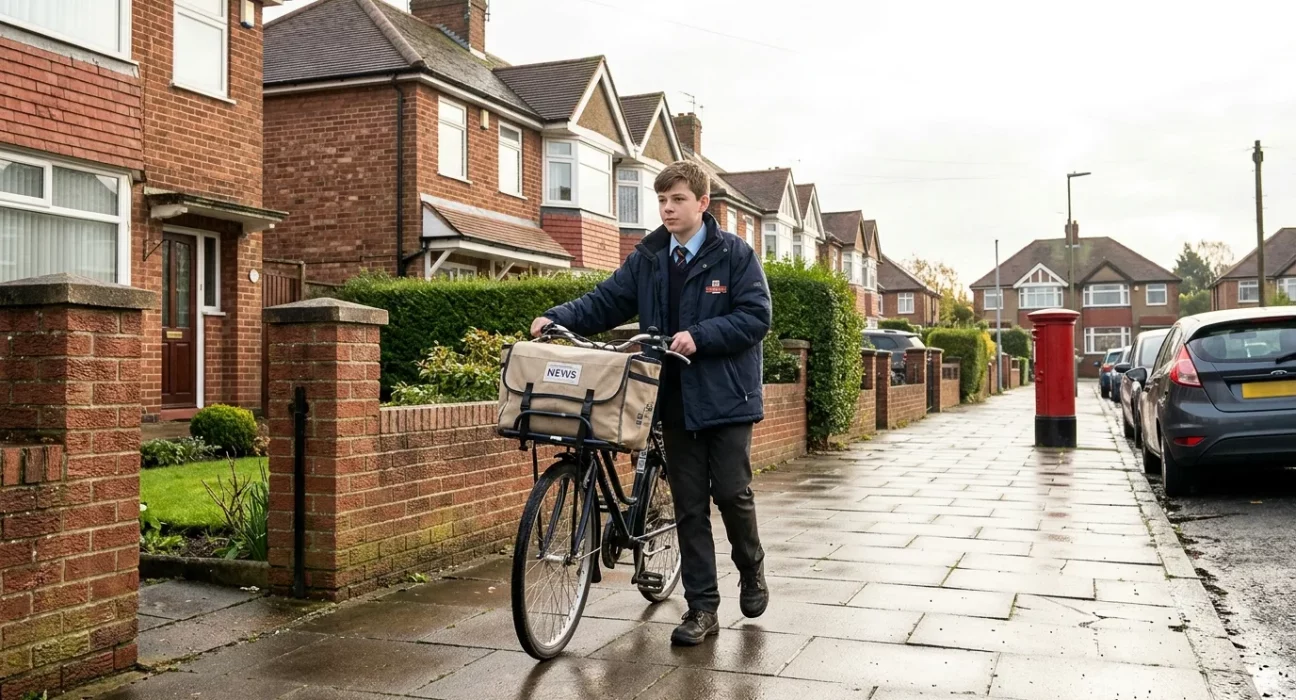
1. Paper Round
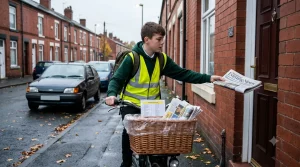
A paper round remains one of the most traditional and accessible jobs for a 14-year-old in the UK.
The work usually involves collecting newspapers from a local newsagent and delivering them to customers within an agreed route. Some rounds take place early in the morning, while others involve evening or weekend deliveries.
Possible earnings: Around £25–£45 per week depending on the size of the route, frequency of deliveries and local rates.
This type of job can help young people develop punctuality, independence and responsibility. A good starting point is to ask nearby independent newsagents whether they employ school-aged delivery workers and whether a council work permit is required.
2. Babysitting

Babysitting can be a suitable way for responsible 14-year-olds to earn occasional money, particularly for relatives, neighbours and trusted family friends.
Typical duties might include playing with younger children, preparing simple snacks, helping with homework or keeping children occupied until their parents return.
Possible earnings: Around £6–£10 per hour depending on the area, number of children and level of responsibility.
It is sensible to begin with families already known to the teenager and their parents. Learning basic first aid can also improve confidence and reassure parents considering using a young babysitter.
3. Dog Walking And Pet Sitting

Dog walking and pet sitting are good options for teenagers who are confident around animals.
The work may involve taking a dog for a short walk, feeding pets, refreshing water bowls or checking on animals while owners are temporarily away.
Possible earnings: Around £8–£12 per walk in some areas, although rates vary considerably.
Young people can often find their first customers through neighbours, relatives and family friends. Parents should be aware of where the teenager is working, particularly if the job involves entering another person’s home or walking animals in unfamiliar areas.
4. Car Washing

Car washing is a simple local service that can be started without formal qualifications or previous employment experience.
A 14-year-old could offer basic exterior washing to neighbours, relatives and family friends and gradually find additional customers through recommendations.
Possible earnings: Around £5–£10 per car depending on the service provided.
Teenagers should stick to straightforward tasks using safe cleaning products. Strong chemicals, electrical machinery and working beside busy roads should be avoided.
5. Gardening And Light Outdoor Work

Light gardening can be suitable for teenagers who enjoy practical outdoor work.
Tasks might include watering plants, pulling weeds, collecting leaves, sweeping paths, planting flowers or carrying out basic lawn care where the equipment is appropriate and safe.
Possible earnings: Around £5–£8 per hour depending on the job and local rates.
Young workers should not be expected to use dangerous machinery, sharp powered equipment or hazardous chemicals. Starting with neighbours or elderly family friends who need occasional help can be an easy way to find suitable work.
6. Tutoring Younger Pupils

Teenagers who are particularly strong in subjects such as maths, English, science or languages may be able to help younger children with schoolwork.
Tutoring at this age is usually informal and may involve reading practice, homework support, revision or explaining basic topics to primary-school pupils.
Possible earnings: Around £8–£15 per hour can sometimes be agreed privately.
The easiest way to begin is usually through younger relatives, neighbours or family contacts. Building a good reputation can lead to recommendations to other parents.
7. Independent Shop Or Newsagent Assistant

Some small independent shops may employ 14-year-olds to carry out permitted light duties.
This could include arranging shelves, tidying displays, preparing simple stock areas, packing items or carrying out basic cleaning duties.
Possible earnings: Pay is normally agreed directly with the employer and might be around £4–£8 per hour in some cases.
Large national retailers tend to have higher minimum hiring ages, so independent businesses are often a more realistic option. The employer should still check local council child-employment bylaws and permit requirements before the teenager starts.
8. Leaflet Delivery
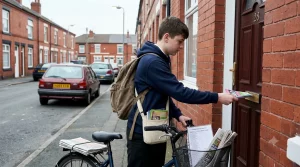
Delivering leaflets can provide occasional work for local businesses, estate agents, restaurants, community groups and other organisations.
The teenager will normally receive a particular route or area and deliver leaflets through residential letterboxes.
Pay may be calculated according to the number of leaflets delivered or the size of the route rather than an hourly rate.
The route should be safe, manageable and within legal working hours. Parents should also know where the teenager will be delivering, especially when routes cover unfamiliar neighbourhoods.
9. Stable, Kennel Or Farm Helper

Young people who enjoy working with animals may find light work at local riding stables, kennels or farms.
Suitable tasks could include preparing feed, filling water containers, basic cleaning, brushing animals or helping staff with simple supervised duties.
Pay and responsibilities vary significantly between businesses, and some opportunities may be voluntary or focused more on gaining experience.
Local child-employment rules can restrict particular agricultural or animal-care tasks, so the employer should confirm that the proposed duties are permitted before offering the work.
10. Junior Sports Club Assistant

A teenager who already participates in sport may be able to help at a local football club, cricket club, tennis centre or other junior sports organisation.
Tasks could include setting out equipment, collecting balls, preparing training areas, helping younger groups organise themselves or assisting a qualified coach with simple activities.
This type of role can be particularly useful for teenagers interested in eventually moving into coaching, fitness or sports-related employment.
However, junior sports assistance should not be confused with professional roles requiring formal qualifications.
For example, pool lifeguarding is not normally available at 14 because the National Pool Lifeguard Qualification requires candidates to be at least 16 by the final assessment.
Overall, the best first jobs at 14 tend to be local, light-duty roles with manageable hours and clear supervision. They can provide useful experience while helping teenagers build communication, reliability, confidence and basic money-management skills.
What Jobs Can a 14-Year-Old Not Do?
Child employment rules prevent young people from doing work that could harm their health, education or development.
A 14-year-old generally should not be working in places such as factories or industrial sites or carrying out work involving dangerous machinery or unsafe conditions.
Local bylaws can impose additional restrictions covering hospitality, commercial kitchens, alcohol, street trading and other activities.
This is why checking the local council rules matters even when a job appears harmless.
How Much Do 14-Year-Olds Get Paid in the UK?
There is no National Minimum Wage entitlement for someone who has not yet reached school-leaving age. Pay therefore needs to be agreed with the employer or customer.
For comparison, from 1 April 2026, the statutory National Minimum Wage for eligible workers under 18 is £8.00 per hour, up from £7.55 in 2025/26. However, that does not mean every 14-year-old is legally entitled to £8.00.
Young workers also have the same basic Income Tax Personal Allowance as other taxpayers. For 2026/27, the standard Personal Allowance is £12,570.
Can a 14-Year-Old Make Money Working for Themselves?
Small independent services can sometimes be easier to find than formal employment.
Examples include:
- Dog Walking
- Gardening
- Car Washing
- Tutoring
- Babysitting
HMRC’s trading allowance covers up to £1,000 a year of qualifying gross income from self-employment or casual services. If gross trading income exceeds £1,000, the person may need to tell HMRC and register for Self Assessment. Records of income should still be kept.
Being self-employed does not automatically remove child-safety or local bylaw considerations, so parents should still check the relevant council rules.
Can a 14-Year-Old Work at Tesco, McDonald’s or Other Major Chains?
Large national chains are generally much harder to enter at 14 than small independent businesses.
| Employer Type | Realistic At 14? |
| Tesco, Sainsbury’s, Asda or Aldi | Usually not, with many roles beginning at 16 or school-leaving age |
| McDonald’s, Costa or Greggs | Generally not at 14, depending on the vacancy and employer rules |
| Primark, Boots or Superdrug | Most standard vacancies are aimed at older applicants |
| Independent Newsagents | Sometimes |
| Local Shops | Sometimes |
| Farms, Kennels And Stables | Sometimes, subject to local rules |
| Swimming Pool Lifeguard | No, standard NPLQ qualification requires 16+ |
Individual employers can change recruitment requirements, so always check the particular vacancy rather than relying on an old age-policy list online.
Once a teenager reaches 16, considerably more retail, hospitality and service roles become available. The options in jobs you can get at 16 show how the employment market expands at that age.
How Can You Find a Job at 14?
At 14, walking into a local business with a short CV can often be more useful than applying through large online job boards.
A simple CV can include:
- Name And Contact Details
- School And Current Year Group
- Strongest Subjects
- Clubs, Sports And Activities
- Volunteering Or Responsibilities
- Useful Skills
- Teacher Or Adult Reference Where Appropriate
When approaching a local employer, keep it simple: introduce yourself, explain that you are 14, say what hours you can legally work and ask whether they employ school-aged young people.
Parents should know where applications are being made and should check unfamiliar businesses before a teenager attends an interview or starts work.
What Should Parents Check Before a 14-Year-Old Starts Work?
Parents should confirm that the work is suitable, properly supervised and does not interfere with school.
Check the employer’s proposed duties, working hours, council permit requirements and insurance arrangements. The young person should also know who supervises them and what to do if they feel unsafe or are asked to perform duties that were not originally agreed.
Rules vary locally. Scotland, Wales and England all use child-employment legislation alongside local authority bylaws.
Scottish Government guidance, for example, confirms that permitted work and employment permits can vary between local authorities. Wales likewise advises parents and employers to check their local authority requirements.
Northern Ireland has its own legal framework, so families there should check current local education and employment requirements before accepting work.
Conclusion
So, what jobs can you get at 14 UK? The most realistic choices are paper rounds, babysitting, dog walking, car washing, gardening, tutoring, leaflet delivery and suitable light work with independent local businesses.
The biggest difference between getting a job at 14 and working as an older teenager is regulation. Hours are limited, certain work is prohibited and a local council permit may be required.
For a first job, focus less on finding the highest advertised wage and more on finding safe, legal work that builds reliability, communication skills and useful experience.
FAQs
Can a 14-Year-Old Work in a Shop in the UK?
Sometimes. Light work in an independent shop may be permitted, but the employer needs to check local council bylaws and whether a child employment permit is required.
Do You Need a Work Permit at 14?
Many local councils require employers to obtain a child employment permit for school-aged workers. Requirements vary, so the employer should check with the relevant council.
Can a 14-Year-Old Work Full-Time During School Holidays?
No. A 14-year-old is normally limited to 25 hours per week during school holidays.
How Much Can a 14-Year-Old Earn in the UK?
There is no statutory minimum wage below school-leaving age. Pay is agreed with the employer or customer and varies according to the job and area.
Can a 14-Year-Old Work in a Café?
Possibly, but local bylaws can restrict the work children may perform, particularly around commercial kitchens, dangerous equipment and alcohol.
Can a 14-Year-Old Do a Paper Round?
Yes, where local rules allow it. Newspaper delivery is one of the traditional forms of light employment for school-aged children.
Can a 14-Year-Old Work After 7pm?
No. Child employment rules generally prohibit children below school-leaving age from working after 7pm or before 7am.
Leave feedback about this